In Sep 2026, the physical book (ISBN:978-1-957011-52-3) is published by bookanicals, Tianjin, China, and can be purchased here.
INTRO
TL; DR - but, click to read more







OUTRO
Pink Noise is a macroscopic metaphor, one that points toward more abstract ideas. When I first started working on it, I tried to downplay Hong Kong's presence — because the decline of industrialization and human adaptation ought to be universal themes, not confined to a single city or a single sentiment. But I soon noticed that everyone who flips through the work immediately recognizes it as Hong Kong, and inevitably asks: what do these atypical Hong Kong landscapes imply?
So I gave up on the idea of "de-Hong Kong-ing" the project. Pink Noise, I think, is indeed a project that grew out of Hong Kong. They say names are spells. From the moment it was christened with the brilliantly evocative term "concrete forest“ — and if we take that term seriously, then Hong Kong is always going to be the site of a Democratic Forest, an absolute, post-anthropocentric democracy where everything counts equally.
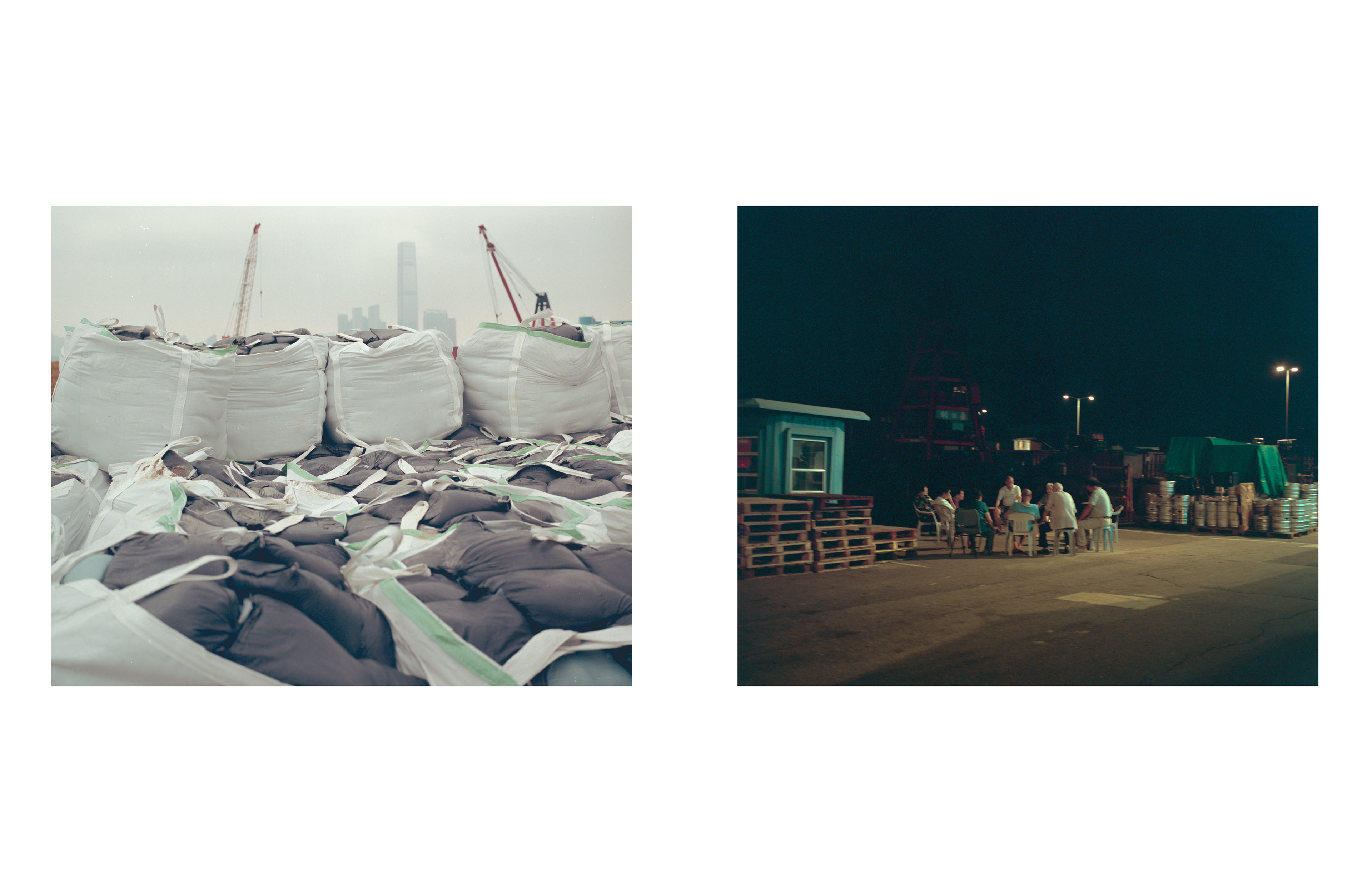
To talk about human activity in an age when everyone is itching to move might seem to suggest a kind of passive-aggressiveness. But it's quite the opposite — it's an aggressive passiveness: one extreme industrialization collapsing into the next, so dense that a needle couldn't even lie flat within it. Passivity is not a posture; it's the only space left to exist.
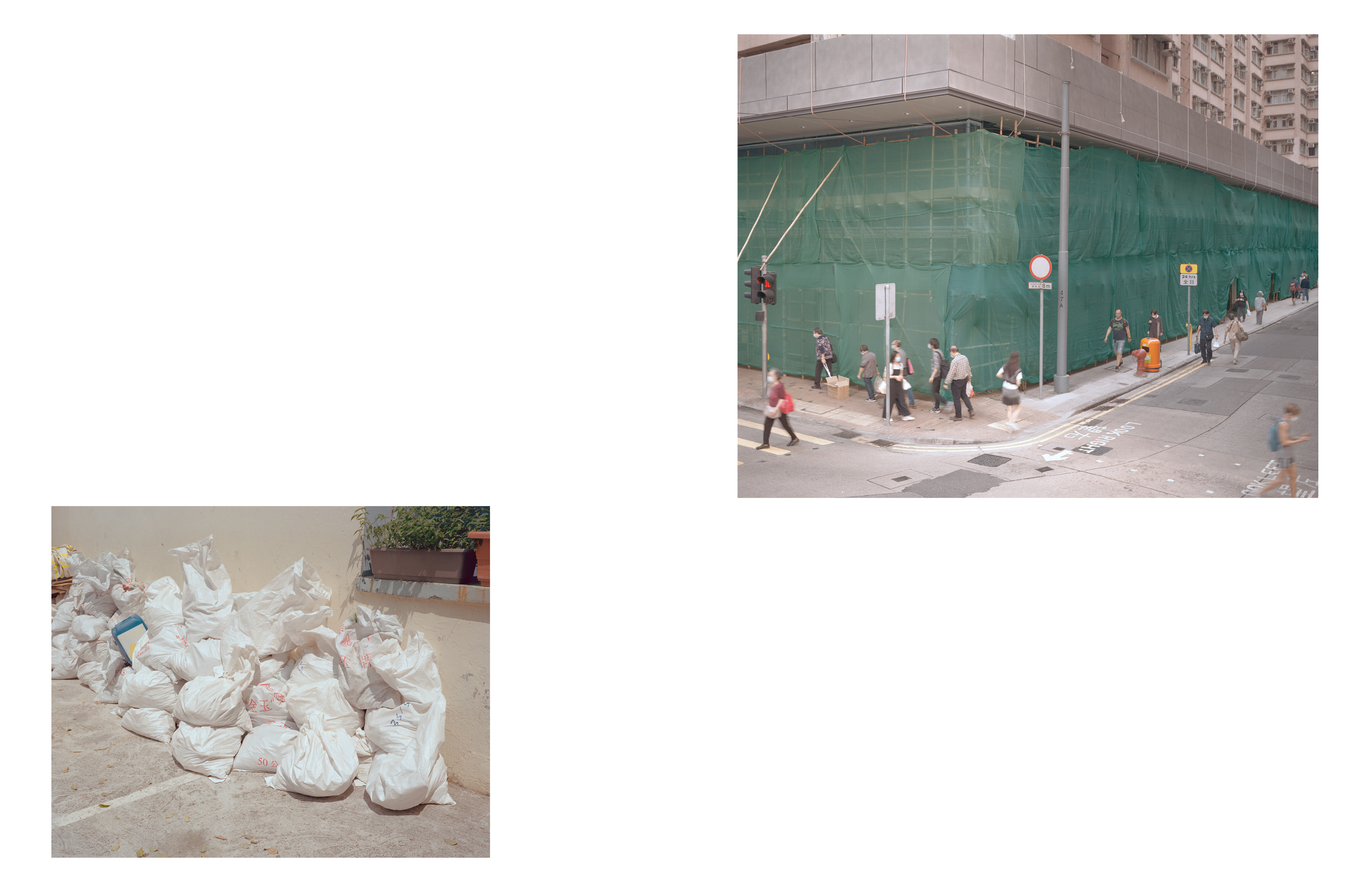
The place where I take drum lessons is an industrial building in Kwai Hing wrapped in bamboo scaffolding; on unlucky days you have to transfer into a paint-splattered freight lift whose iron gate you haul up by hand before it will run. I'd rather practice at the drum room in Futian a friend recommended than go to class at all — it sits on top of a wet market (you couldn't even call it a second floor), but there simply isn't that anxiety that comes purely out of a tight space. I've come to call it "Hong Kong Retro Anxiety”[1] — the kind of high-contrast, saturated longing that looks gorgeous and suffocates you at the same time. Like the neon of Yau Tsim Mong, or the ghosts in Lan Kwai Fong at Halloween, it's alluring and dangerous, and on its way past it snuffs out the impulse to ask questions.
It occurred to me once that Hong Kong might be the only place that has lived industrialization as though it were an indigenous way of life. The loss that people mourn here is, in essence, an indigenous loss — inevitable, lingering, as drawn out as the days of the monsoon season. And that melancholy isn't because something particularly precious has been lost, but because it has finally begun to be carried along by time, like every ordinary civilization before it. It is not special — and that very lack of specialness, for those who once were, is itself a loss of agency.
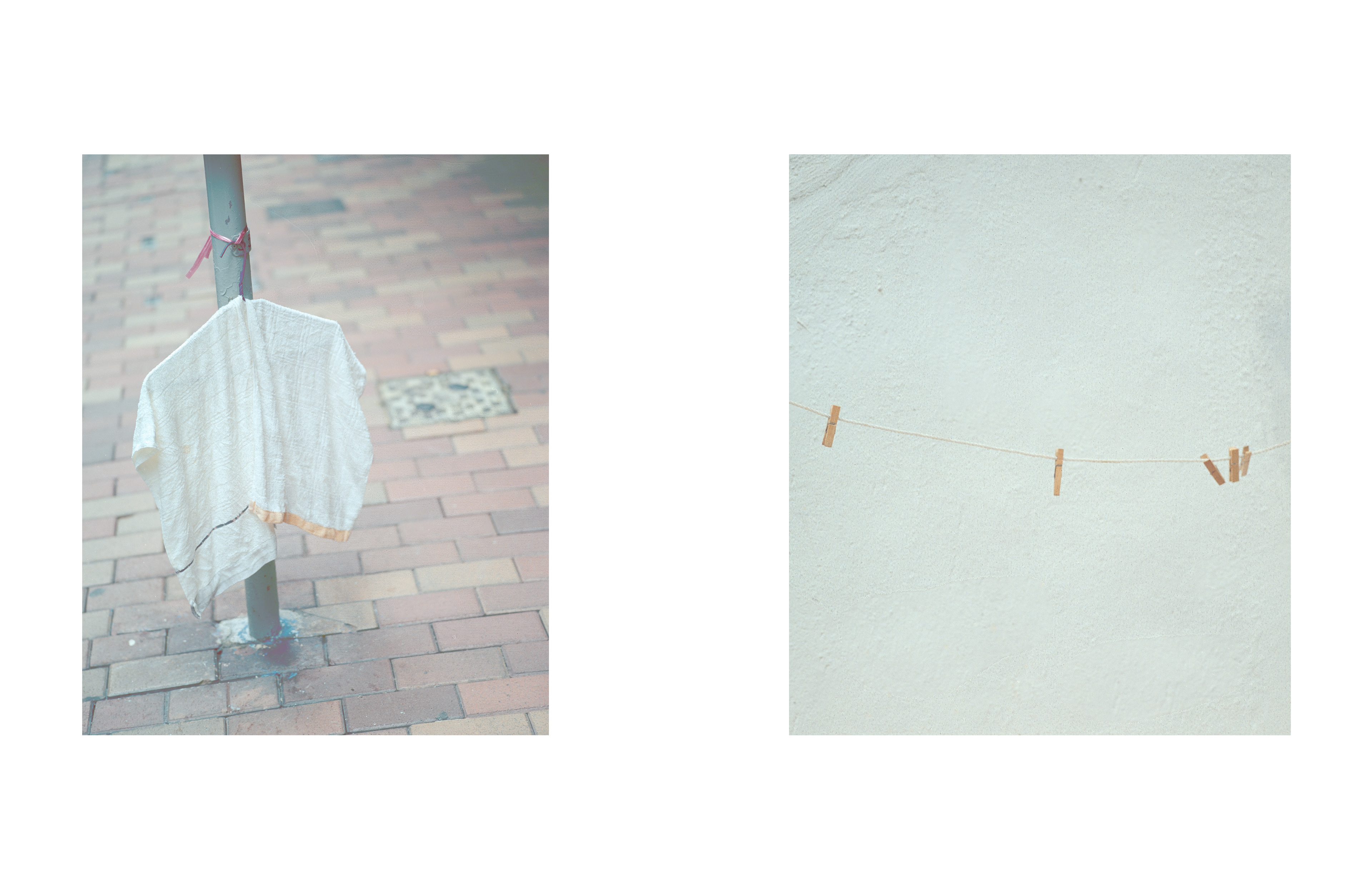
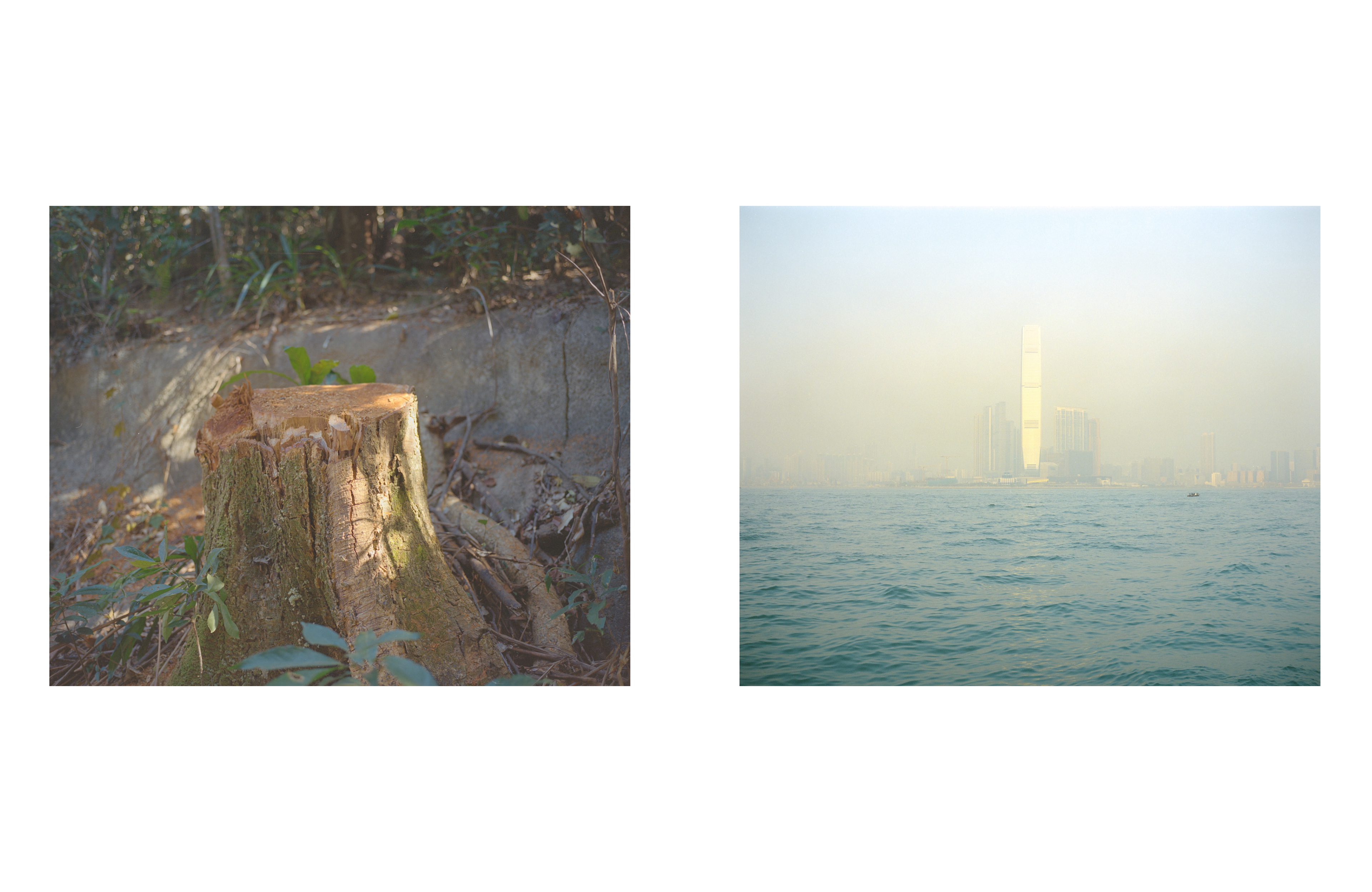
And Pink Noise is something like a bedtime signal broadcast to everybody, telling them there’s nothing to worry about: bamboo goes up over a building and comes back down, a building weathers and a tree withers — "it's all the same.”[2]
[1] Hong Kong retro style is a nostalgic design and fashion movement that reinterprets the city's "golden era" from the 1950s to the 1990s, blending iconic local elements like neon signs, bamboo scaffolding, and cheongsams with contemporary aesthetics. Yet beneath its alluring surface, this style embodies an underlying emotional tension—an anxiety and sense of impermanence rooted in the city's history, reflecting a collective fear of loss and a desire to preserve cultural identity amid relentless change.
[2] "It's all the same" — the last words of Zhang Beihai in Liu Cixin's The Dark Forest (the second book of the Three-Body trilogy). As the natural selection ship is about to be destroyed, he accepts the outcome with quiet equanimity, recognizing that whether he or another survives, the continuity of the human species is what matters.
Pink Noise是一个宏观的比喻,它对应于一些更抽象的概念。我在做Pink Noise的时候曾想尽量淡化香港的存在感,因为关于工业化的衰落和人类的自适应应当是一个非常普适的话题,它不应该只是一个城市、一种情感。但后来我发现每一个翻阅过它的人都会立刻意识到这是香港,然后很自然地追问,这些非典型香港景观暗示着什么。
我于是放弃了在项目中的“去香港化”,我想,Pink Noise确实是一个从香港长出来的项目。都说名字是咒语,从“石屎森林”这个天才命名开始,香港就注定了它有潜力承载一种去人类中心主义下的绝对的民主。
在一个人人蠢蠢欲动的年代讲人类活动其实一点也不重要,乍一听很有一点passive aggressiveness的意思。可是恰恰相反,它是一种 aggressive passiveness:一场极致的工业化在下一场工业化里坍缩,而前者方寸之间甚至容不下一根横放的针。消极不是一种姿态,是仅剩的容身之法。
我学架子鼓的地方在葵兴工业区一栋被竹棚包起来的工厦,运气不好的时候还得换乘手动拉起铁栅栏才能运行的泼了漆的货运电梯。比起上课我更愿意去福田朋友推荐的鼓房练习,虽说是在一个菜市场的顶上(连二楼都算不上),但就是不再有那种纯粹出于逼仄空间的焦虑——我称之为“港风焦虑”,像油尖旺的霓虹和万圣节兰桂坊的鬼,迷人而危险,顺手掐掉了追问的冲动。
我想,香港可能是唯一一个把工业化活成了原住民的地方。他们感伤的那种失去其实就是一种原住民式的失去,不可避免,又像回南天一般缱绻漫长。而这种惆怅并非因为它真的失去了什么特别的东西,而是因为它终于开始像所有普通文明一样,被时间推着走了。它不特殊,而不特殊这件事,对于曾经特殊过的人事物来说,本身就是一种失权。
而Pink Noise就像是发给所有人的一个睡前电波,告诉他们没有什么大不了的,竹棚罩起又褪下,一座楼的风化和一棵树的衰亡,“都一样”。